


























July 19, 2026
The United States launched a new wave of airstrikes against Iranian military targets early Sunday, further escalating tensions between Washington and Tehran after two U.S. service members were killed and another was reported missing following an attack on American forces in Jordan.
According to U.S. Central Command (CENTCOM), the strikes began at approximately 6:00 p.m. ET on Saturday under the direction of President Donald Trump. The military said the operation targeted Iranian coastal surveillance systems, air defense sites, military logistics facilities, underground weapons storage locations, and infrastructure used by the Islamic Revolutionary Guard Corps (IRGC).
U.S. officials said the mission was designed to reduce Iran’s ability to threaten international shipping in the Strait of Hormuz while responding to recent attacks on American personnel stationed in the region.
CENTCOM later confirmed that the operation had concluded successfully, stating that multiple military targets along Iran’s southern coastline had been struck. Iranian media reported explosions near Sirik in Hormozgan Province, as well as missile strikes near Shadegan and on Qeshm Island. Iranian officials claimed there were no immediate reports of civilian casualties from those strikes, although independent verification remains unavailable.
Iran Launches Drone Attacks on U.S. Bases in Kuwait
Hours after the American operation, Iran announced that it had launched retaliatory drone attacks targeting U.S. military facilities in Kuwait.
Iranian state television quoted an official military statement claiming that Iranian forces carried out “large-scale attacks with kamikaze drones” against Camp Udairi and Ali Al Salem Air Base. According to Tehran, the attacks targeted ammunition depots, Patriot missile defense systems, and air surveillance radar installations.
Iran also claimed responsibility for additional attacks against American military positions in Bahrain and Jordan. Iranian state media further alleged that several U.S. military aircraft were destroyed during the strikes, although these claims have not been confirmed by U.S. officials or independent sources.
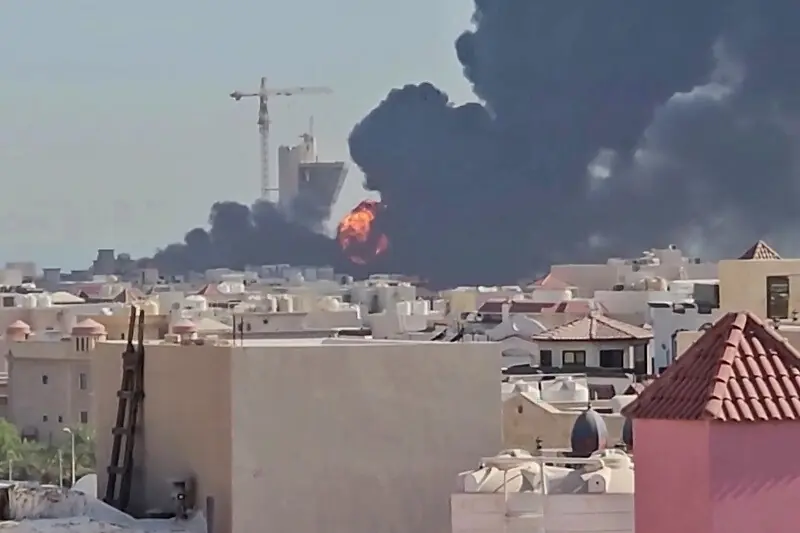
Kuwaiti authorities acknowledged that the country had intercepted missiles and drones targeting its territory. Officials also reported that emergency responders and oil sector workers suffered injuries while responding to the attacks. Kuwait Petroleum Corporation later confirmed that one of its oil facilities had sustained damage during the attacks.
U.S. Casualties Continue to Rise
CENTCOM confirmed that two American service members were killed during an Iranian attack on Friday in Jordan, while another soldier remains missing.
The latest deaths increase the number of U.S. military personnel killed since the conflict intensified earlier this year. Hundreds of additional service members have reportedly been wounded during repeated missile and drone attacks across the region.
U.S. Defense Secretary Pete Hegseth paid tribute to the fallen service members in a post on X, writing: “Godspeed, heroes. Their sacrifice only stiffens our resolve.”
Iranian Leadership Issues Fresh Warning
Iran’s Supreme Leader Ayatollah Mojtaba Khamenei accused Washington of deliberately escalating the conflict and warned that the United States would face “even heavier costs” if military operations continued.
In a statement carried by Iranian state media, Khamenei said recent American actions demonstrated that previous diplomatic commitments had lost all credibility.
Senior military adviser Major General Mohsen Rezaei also warned that Iran would abandon its strategy of proportional retaliation if additional U.S. attacks occurred. According to Iranian media, he stated that Tehran was prepared to launch full-scale offensive operations against American interests throughout the region.
The White House did not immediately issue a formal response to the latest Iranian statements.
Conflict Expands Across the Gulf
The latest exchange of attacks comes after an interim ceasefire collapsed last week, ending a brief pause in fighting that had raised hopes for renewed diplomatic negotiations.
Over the past several days, both countries have significantly expanded their military operations.
Iran has launched missiles and drones toward U.S. military facilities and allied countries across the Gulf region, including Kuwait, Bahrain, and Jordan. Saudi Arabia also activated early warning systems after detecting potential aerial threats near military installations and critical energy infrastructure, although Iranian officials did not claim responsibility for any attacks on Saudi territory.
Meanwhile, U.S. forces have continued targeting Iranian military infrastructure, including surveillance facilities, logistics centers, transportation networks, and weapons storage sites.
The widening conflict has prompted growing concern among regional governments over the possibility of a broader Middle East war.
Strait of Hormuz Remains at the Center of the Crisis
One of the most significant flashpoints remains the Strait of Hormuz, through which roughly one-fifth of the world’s oil supply passes.
The United States says its military operations are intended to protect commercial shipping and prevent attacks on international maritime traffic.
Iran, however, accuses Washington of attempting to establish military control over the strategic waterway and has vowed to continue targeting vessels it believes violate its maritime regulations.
The continuing military confrontation has fueled concerns over global energy prices, supply chain disruptions, and increased risks to international shipping companies operating in the Gulf.
Global Travel and Security Concerns
Amid the escalating conflict, the U.S. State Department has issued a worldwide travel alert for American citizens, warning of possible flight cancellations, temporary airspace closures, and additional security threats across the Middle East.
Several international airlines have already adjusted flight routes to avoid conflict zones, while governments continue to monitor the rapidly changing security situation.
Diplomatic efforts to restore a ceasefire have so far shown little progress, and military analysts warn that further retaliation from either side could significantly increase the risk of a wider regional conflict involving additional countries.
Editor’s Note: Some battlefield claims made by Iran regarding damage to U.S. military assets have not been independently verified. Information continues to develop as officials from both sides release new details.