






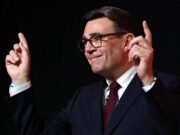





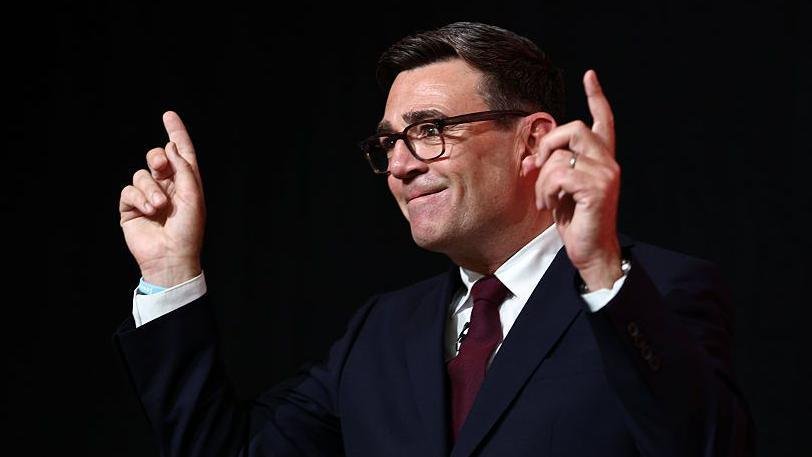
LONDON: Veteran British politician Andy Burnham was confirmed as the new leader of the ruling Labour Party on Friday, putting him on course to become the United Kingdom’s next prime minister following the resignation of Keir Starmer.
At a special Labour Party conference in London, Interior Minister Shabana Mahmood formally declared Burnham elected after no other eligible candidate was nominated.
“There being no other eligibly nominated candidate, it is therefore my honour to declare that the duly elected leader of the Labour Party is Andy Burnham,” Mahmood announced.
Burnham replaces Keir Starmer, who stepped down as party leader and prime minister last month after months of political turmoil, scandals and mounting pressure. With Labour holding a commanding parliamentary majority following the 2024 general election, Burnham is expected to become Britain’s next prime minister without a fresh national vote. He will formally take office on Monday, becoming the UK’s seventh prime minister in a decade.
‘A distinctively Labour direction’
In his first speech as leader, Burnham pledged to unite the party, restore public trust in politics and steer Labour back to its traditional values through what he described as a “distinctively Labour” agenda.
He unveiled a five-point plan focused on party unity, political renewal, constitutional reform, representing every part of the UK and devolving power from Westminster and Whitehall to local communities.
He said Labour would cooperate with other political parties where appropriate but would do so “from the clarity of knowing exactly where we stand.”
“As your leader, I will set a direction that is distinctively Labour,” Burnham said.
“We won’t try to out-Green the Greens or out-Reform Reform or do what we’ve done in the past — wearing too many Tory clothes.”
In a light-hearted swipe at Conservative leader Kemi Badenoch, Burnham added: “I’m quite happy that Kemi doesn’t approve of my wardrobe choices because I’m not keen on theirs either.”
“From here we do it differently. We win by being us — boldly, confidently, authentically us — Labour.”
Appearing emotional as he addressed delegates, Burnham thanked party members for their overwhelming support.
“This is a proud moment you have given me and my family today, and an emotional one, but it is one for which I am ready,” he said.
Cabinet and governing priorities
Burnham said he had not yet decided the composition of his senior ministerial team but promised it would reflect the diversity of both the party and the country.
“I haven’t made any decisions yet about who will be in that top team. But I will soon, and when I have, you will see it reflects all parts of our party, all communities,” he said.
The former Greater Manchester mayor also outlined an economic vision centred on decentralisation and stronger partnerships between government and business.
Nicknamed the “King of the North” after winning three successive mayoral elections in Greater Manchester, Burnham said devolving more powers to cities and regions would help revive Britain’s economy. His proposals include establishing a “Number 10 North” office to strengthen decision-making outside London.
“The past four decades since the 1980s have not been kind to the places that built our party, nor to the communities across the UK in rural and coastal areas,” Burnham said.
“So we pledge today, to them, to be better.”
“If we want an economy and a country that works for all people and places, then it requires a new path to the one we’ve been on for the last 40 years.”
Burnham also described himself as a pro-business Labour leader, saying his experience working with businesses as mayor of Greater Manchester would serve as a blueprint for national government.
“I will be a pro-business leader of the Labour Party, as I was a pro-business mayor of Greater Manchester,” he said.
“We turn places round together, and that is the way we ran in Manchester, and we will take to the whole country.”
He argued that the government needed greater public control over essential services and costs to manage inflation and improve economic stability.
“If we don’t have sufficient public control over the cost of the essentials, how can we have control over inflation, public spending, and the rest of the economy?” he said.
Burnham concluded by promising to restore optimism across Britain.
“People and places have been waiting too long for politics to let them hope again. We’re going to give them hope back,” he told cheering delegates.
“I am for us, for all of us.”
From Liverpool to Downing Street
Born in Liverpool in 1970 and raised in Cheshire, Burnham studied English at the University of Cambridge before beginning his career in journalism and later entering politics.
He was first elected to Parliament in 2001 and served in several cabinet positions under former prime minister Gordon Brown. After leaving Parliament in 2017, he became the inaugural mayor of Greater Manchester, earning national recognition for expanding the region’s transport network and championing the interests of northern England.
Burnham unsuccessfully contested the Labour leadership twice before returning to Parliament in a by-election last month. His victory over Reform UK’s candidate, combined with growing support from Labour MPs, quickly established him as the frontrunner to succeed Starmer.
Senior Labour figures, including former Health Secretary Wes Streeting, withdrew their own leadership ambitions and endorsed Burnham, helping secure his unopposed election.
Burnham is married to Marie-France van Heel, whom he met while studying at Fitzwilliam College, Cambridge, in 1989. The couple have three children: Jimmy, Rosie and Annie.