
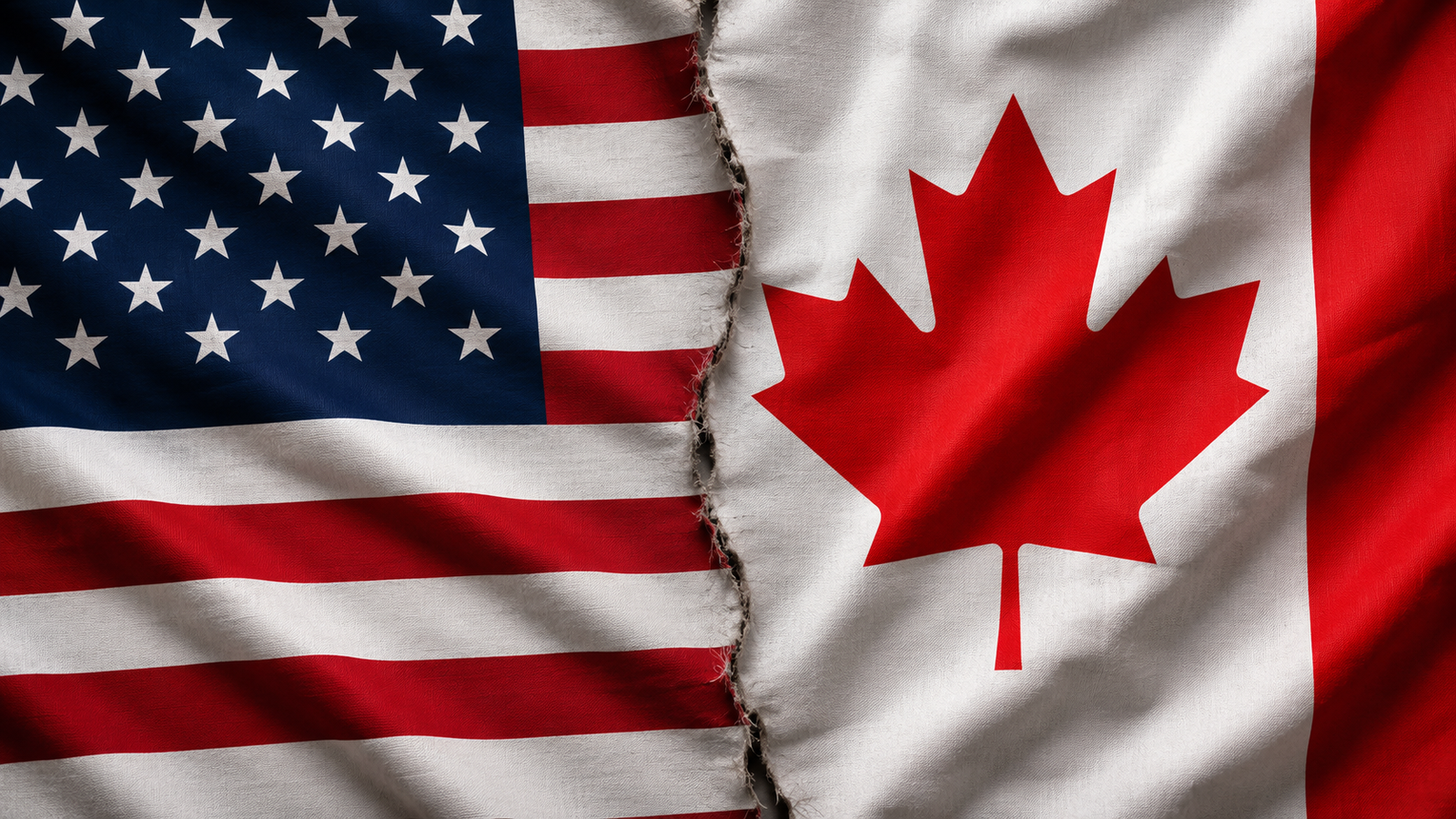
WASHINGTON: US President Donald Trump has announced sweeping 50% tariffs on a wide range of Canadian imports, opening a new front in the growing global trade conflict and marking the first-ever use of Section 338 of the US Tariff Act of 1930.
The new tariffs, scheduled to take effect on August 19, will apply to nearly $20 billion worth of Canadian goods—around 5.2% of the $382 billion in products the United States imported from Canada in 2025, according to US Census Bureau data.
The Trump administration said the move was prompted by what it described as Canada’s discriminatory treatment of American-made automobiles, alcohol and dairy products, as well as Ottawa’s retaliatory measures against previous US tariffs.
Invoking Section 338 of the Tariff Act of 1930, Trump imposed punitive duties of up to 50% on Canadian imports. The rarely used provision allows a US president to penalize countries deemed to discriminate against American goods. Trade experts say this is the first known time the authority has been used since the law was enacted nearly a century ago.
The tariffs will affect a broad range of products, including wine, dairy products, cement, furniture, swimming pools, fishing rods, seeds, clothing, wigs and ice hockey equipment. However, key goods such as energy products, potash, fish, critical minerals and products already covered under Section 232 national security tariffs will remain exempt.
“While the administration continues to secure fair and reciprocal trade deals with our trading partners, Canada, unlike other partners and allies, continues to retaliate against the United States for its efforts to rebalance trade and protect US industry in national security-sensitive sectors,” US Trade Representative Jamieson Greer said in a statement.
The White House accused Canada of maintaining a protectionist dairy supply management system, imposing tariffs and quotas on American-made vehicles while offering preferential treatment to imports from other countries, and removing US alcoholic beverages from provincial liquor stores in retaliation for earlier American tariffs.
According to the administration, Canadian imports of US motor vehicles fell by 22%, while imports of American alcoholic beverages declined by 81% over the past year.
Canadian Prime Minister Mark Carney rejected the allegations, saying Ottawa had already presented comprehensive proposals to resolve the trade dispute. He argued that previous US tariffs violated the US-Mexico-Canada Agreement (USMCA) and that Canada’s retaliatory measures merely matched those imposed by Washington.
“This trade dispute has raised costs for families, particularly in the United States,” Carney said, adding that Canada remains ready to engage in intensive negotiations to resolve outstanding issues for the mutual benefit of both countries.
The latest announcement further complicates trade relations between the two neighbours, with Canada notably excluded from ongoing US-Mexico discussions on potential changes to the USMCA.
Trade tensions also surfaced during Trump’s meeting with Carney at the FIFA World Cup final in New Jersey, where the US president urged Canada to do more to contain wildfires that have sent smoke across large parts of the United States. Trump had previously warned that the economic cost of the wildfire smoke could be added to existing tariffs on Canadian goods.
The use of Section 338 has drawn criticism from trade experts. The Tariff Act of 1930 is widely associated with the sweeping tariff increases that many economists believe worsened the Great Depression by triggering retaliatory trade measures around the world.
John Veroneau, a former US trade official under President George W. Bush, said that although the tariffs may be legally permissible, they contradict the original purpose of Section 338, which was designed to encourage equal tariff treatment rather than retaliation.
Following World War II, countries adopted the “most-favoured-nation” principle under the General Agreement on Tariffs and Trade to discourage discriminatory trade practices and prevent the protectionist policies that contributed to the global economic downturn of the 1930s.
Analysts warn that the new tariffs could raise costs for businesses and consumers on both sides of the border, disrupt supply chains and increase pressure on Washington and Ottawa to reach a negotiated settlement before the measures take effect.