







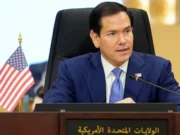







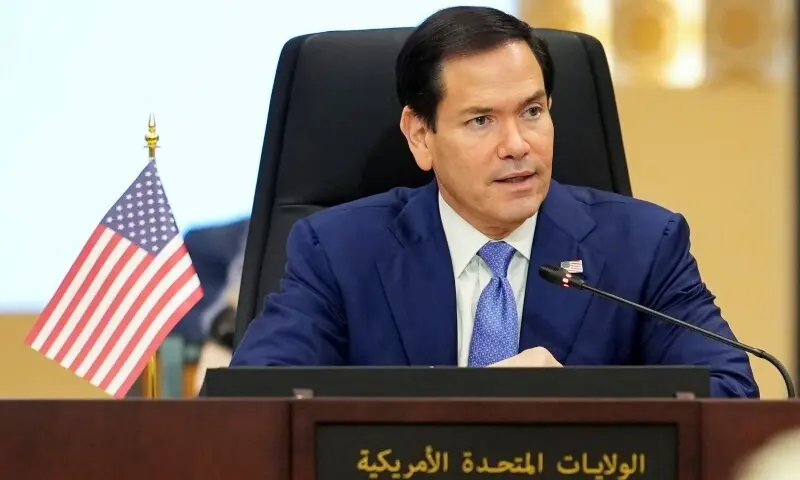
Manama: US Secretary of State Marco Rubio sought to calm concerns among Gulf nations during meetings in Bahrain on Thursday, emphasizing that any future agreement between Washington and Iran would prioritize the security and interests of America’s regional partners.
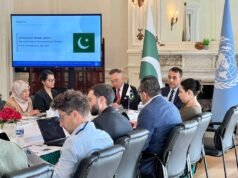
Addressing officials from the Gulf Cooperation Council (GCC), Rubio said the United States remains committed to achieving a lasting diplomatic solution with Iran without compromising the stability of allied nations in the Middle East. His visit comes amid efforts to build support for a preliminary framework intended to reduce tensions following months of conflict.
The strategic Strait of Hormuz remained a central topic during discussions. Rubio stressed that international waterways must remain open and accessible, stating that no nation should impose restrictions or fees on global maritime traffic through such routes.
Bahrain’s foreign minister welcomed Oman’s initiative to establish a secure maritime corridor aimed at protecting commercial shipping and reducing risks in the region’s vital energy transit lanes.
Rubio’s Gulf tour marks one of the first major diplomatic engagements following the announcement of a US-Iran framework agreement designed to end recent hostilities. During stops in the United Arab Emirates, Kuwait, and Bahrain, he reassured leaders that Washington would not pursue arrangements that weaken the security of long-standing regional allies.
Despite ongoing negotiations, differences remain between the United States and Iran regarding several key issues, including nuclear inspection arrangements, economic incentives, and broader regional security matters. Public statements from both governments have reflected differing interpretations of the current discussions.
The six GCC member states—Saudi Arabia, the United Arab Emirates, Qatar, Kuwait, Bahrain, and Oman—continue to play a significant role in the United States’ security partnerships across the Middle East. Analysts say their support and cooperation are likely to remain crucial as negotiations with Tehran progress.
Reports surrounding the draft understanding suggest it could address post-conflict reconstruction and regional stability, though questions remain about missile programs, financial commitments, and the future balance of power in the Gulf. Rubio indicated that he was not seeking financial contributions from Gulf partners for reconstruction efforts during his visit.
Diplomatic talks are expected to continue in the coming weeks as both Washington and Tehran work toward a more comprehensive agreement while regional governments closely monitor developments.