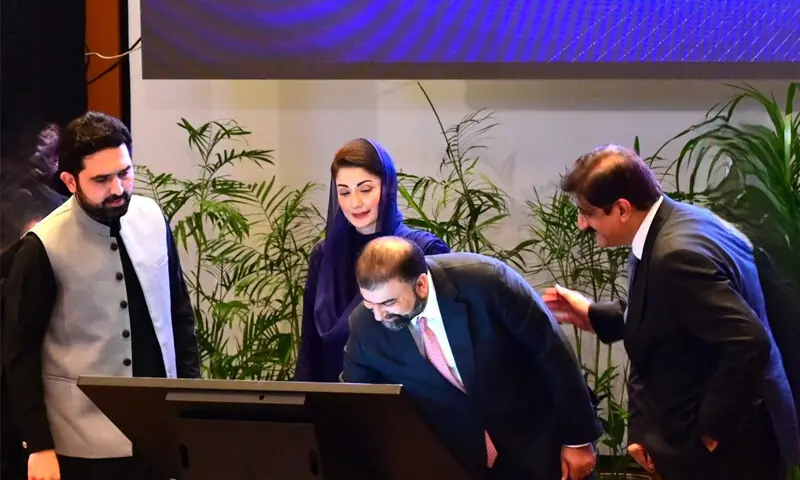
ISLAMABAD: Pakistan’s four provincial chief ministers on Thursday pledged to pursue coordinated prison reforms by signing the Islamabad Declaration on Prison Reforms at a national conference hosted by the Supreme Court under the National Judicial (Policy-Making) Committee (NJPMC).
The conference brought together Punjab Chief Minister Maryam Nawaz, Sindh Chief Minister Murad Ali Shah, Khyber Pakhtunkhwa Chief Minister Ali Amin Gandapur, Balochistan Chief Minister Sarfraz Bugti, senior judges, and federal officials to discuss a nationwide framework aimed at modernising the country’s prison system.
Addressing the conference, Chief Justice of Pakistan Yahya Afridi said prisons reflected the true state of the criminal justice system and stressed that meaningful reform required sustained provincial leadership and institutional cooperation.
He said prison reforms should remain grounded in human dignity and welcomed the provinces’ commitment to implementing the National Prison Reform Action Plan through practical measures.
Political issues overshadow reform agenda
Although the conference focused on prison reform, speeches by the chief ministers of Punjab and Khyber Pakhtunkhwa largely centred on their experiences and concerns regarding political prisoners.
Khyber Pakhtunkhwa Chief Minister Ali Amin Gandapur urged the judiciary to address conditions at Adiala Jail, where PTI founder and former prime minister Imran Khan is incarcerated.
He requested improved facilities for visitors, including shaded waiting areas, and called for video-link meetings between Imran Khan and his sons living abroad. Gandapur also urged authorities to allow access to personal doctors for medical treatment and requested regular family meetings, while expressing concern over the former premier’s health.
He further criticised restrictions on political gatherings and maintained that prison reforms should begin with Adiala Jail.
Punjab Chief Minister Maryam Nawaz recalled her own imprisonment during the previous PTI government, saying the experience fundamentally changed her understanding of the state’s responsibility towards prisoners.
She spoke about being unable to see her seriously ill mother before her death while she and her father were in custody, describing prison as a place that should never compromise human dignity.
Maryam said Punjab’s prison reforms were influenced by her personal experience and highlighted measures introduced by her government, including emergency panic buttons and alarm systems in prison cells to enable inmates to seek immediate assistance.
She noted that Punjab’s 45 prisons currently house around 69,000 inmates despite an authorised capacity of approximately 39,000, adding that nearly three-quarters of prisoners are undertrial inmates. She said prison reform must go hand in hand with wider criminal justice reforms.
Sindh Chief Minister Murad Ali Shah emphasised rehabilitation and legal aid, saying no inmate should remain without legal representation because of financial hardship. He described rehabilitation as a key pillar of the Sindh government’s correctional policy.
Islamabad Declaration outlines reform roadmap
Reading out the Islamabad Declaration, Federal Law Minister Azam Nazeer Tarar said the proposed reforms were intended to improve conditions for thousands of ordinary prisoners rather than benefit high-profile political figures.
Under the declaration, the provinces committed to reducing unnecessary incarceration, particularly among undertrial prisoners, by expanding access to bail, legal aid, probation, parole, diversion programmes and other non-custodial alternatives, especially for women, children, persons with disabilities, people with mental health conditions and those accused of minor or poverty-related offences.
The declaration also calls for reviewing provincial laws and prison management policies to reduce overcrowding and align prison administration with constitutional and international human rights standards.
Other commitments include improving prison infrastructure, sanitation, nutrition, healthcare, mental health services, complaint redress mechanisms and safeguards against torture and ill-treatment.
The provinces also pledged to expand rehabilitation through education, vocational training, psychosocial support, drug treatment, skills development and post-release assistance, while strengthening coordination among prison authorities, police, prosecutors, probation services, legal aid institutions, health departments and the judiciary.
To ensure implementation, each province will establish a dedicated mechanism to prepare time-bound reform plans, allocate resources, monitor progress and submit regular reports to the national prison reform coordination mechanism.
Criticism over implementation
Former federal minister Fawad Chaudhry criticised the conference, describing the Islamabad Declaration as largely symbolic.
He argued that Pakistan already possesses sufficient prison laws and reform recommendations, saying the real challenge lies in enforcing existing legislation rather than issuing new declarations. According to him, the declaration lacks clear timelines, accountability measures and a concrete implementation framework.
Despite the criticism, the four chief ministers concluded the conference by reaffirming that prison reform is not merely an administrative responsibility but a constitutional, humanitarian and public safety imperative, pledging to work together to build a prison system that is lawful, humane and focused on rehabilitation.