



















November 7, 2025
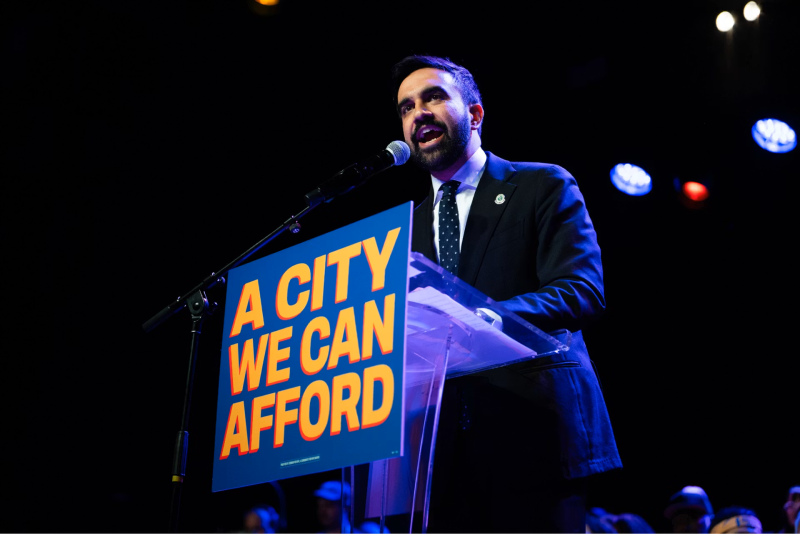
When 34-year-old Zohran Mamdani stepped onto the stage in Queens on election night, the roar that greeted him marked more than just a local victory — it signaled one of the most remarkable political upsets in recent American history.
“What Zohran Mamdani has achieved,” Senator Bernie Sanders said the following day, “is one of the great political upsets in modern American history.”
The newly elected mayor of New York City — the first Muslim and first South Asian ever to hold the office — had just rewritten the playbook for urban politics in America’s largest city. His triumph, powered by young voters, working-class New Yorkers, and immigrant communities, sent ripples across the global progressive movement.
A campaign that reignited faith in politics
Mamdani’s yearlong campaign defied the odds. A democratic socialist born in Uganda to Indian parents and raised in Queens, he ran as a candidate who embodied both the city’s diversity and its frustrations. His platform — universal free childcare, rent freezes, police reform, and higher taxes on the superrich — resonated with a generation struggling under economic pressure.
In an election that saw record turnout — more than two million votes cast, the most since 1969 — Mamdani defeated establishment figures including former governor Andrew Cuomo and Republican nominee Curtis Sliwa. Nearly 70 percent of his voter base was under the age of 30, according to city exit polls.
“Seeing someone who shares similar values, background, and culture in a position of power feels very grounding and affirming,” said Dr. Sayali Karke, a 27-year-old medical professional. “It shows that we belong here and that our voices matter.”
A message to Washington — and Trump’s warning
Mamdani’s victory speech struck both defiance and optimism. “This is not how we stop Trump; this is how we stop the next one,” he told a cheering crowd. “So, Donald Trump, since I know you’re watching, I have four words for you: turn the volume up.”
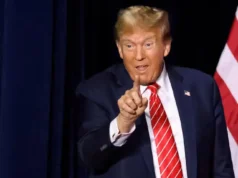
Within hours, President Donald Trump responded on Truth Social: “AND SO IT BEGINS!”
Days later, in an interview with Fox News, Trump added a pointed caveat. “He has to be a little bit respectful of Washington,” he said. “Because if he’s not, he doesn’t have a chance of succeeding. I want to make the city succeed.”
Trump’s remarks came after he had previously threatened to limit federal funding to New York City should Mamdani win — a move critics called unconstitutional. “The president cannot withhold federal funds from states or cities; that’s Congress’s power,” noted constitutional scholar Janet Franks.
The clash between Trump’s White House and New York’s new progressive leadership appears set to define the early months of Mamdani’s term.
Fighting prejudice and rewriting narratives
Mamdani’s campaign weathered a steady barrage of Islamophobic and racist attacks, both online and in the press. His critics — from conservative pundits to political opponents — invoked his Muslim faith as a weapon.
“I was canvassing outside a mosque in Brooklyn when a group of young men hurled Islamophobic insults,” recalled campaign volunteer Zarah Shujjah. “That only made me more determined to get him elected.”
Despite the vitriol, Mamdani’s message of belonging and economic justice resonated far beyond faith or ethnicity. “We’re going to see more Trumps — but we’ll also see more Mamdanis,” said Brooklyn resident Maria Mir, a Pakistani immigrant. “That’s both exciting and reflective of where America is now.”
His victory, observers say, echoes that of London’s Muslim mayor, Sadiq Khan — both men symbols of urban pluralism at a time of global polarization. “It’s a resounding rejection of the far right’s demonization of Muslims and immigrants,” said Sanders.
The transition begins — led by women
Two days after the election, Mamdani announced an all-woman transition team, in what Time Magazine called “a clear signal of his governing philosophy.”
“The poetry of campaigning may have come to a close last night at nine, but the beautiful prose of governing has just begun,” Mamdani said at a press conference in Queens, quoting former governor Mario Cuomo — the father of his defeated rival.
The transition team’s executive director is Elana Leopold, a longtime de Blasio aide and senior strategist from the campaign. Its co-chairs include:
- Maria Torres-Springer, former first deputy mayor,
- Lina Khan, chair of the Federal Trade Commission,
- Grace Bonilla, president of United Way of New York City, and
- Melanie Hartzog, a veteran city budget expert.
Together, they will guide the incoming mayor’s preparations to oversee 300,000 city employees and a $100 billion budget.
A symbol — and a test
To many, Mamdani’s story embodies the promise and paradox of modern democracy: a son of immigrants, raised in a working-class Queens neighborhood, now tasked with leading one of the world’s most complex cities. His victory has energized progressives worldwide, offering what Sanders called “a beacon of hope at a time when the far right is ascendant.”
But governing will be more difficult than inspiring. The Democratic establishment was slow to embrace him, and critics — including pro-Israel groups angered by his staunch support for Palestine — have accused him of antisemitism, charges he rejects.
Political analyst Tara Jenkins warns against over-romanticizing his ascent. “The internet can turn people into symbols faster than they can grow into the roles those symbols demand,” she said. “Now comes the real test — translating ideals into results.”
The road ahead
For now, Mamdani remains focused on building his administration and delivering on his campaign’s promises. His victory has rekindled faith among voters who had long tuned out of politics, proving that an unapologetically progressive message — rooted in empathy, equity, and inclusion — can still capture America’s imagination.
As New York prepares for his inauguration on January 1, the city stands at the threshold of change — and perhaps, renewal.
Whether Zohran Mamdani becomes a model for a new generation of leadership or a symbol of progressive overreach remains uncertain.
But one thing is undeniable: New York — and the world — are watching.