


























WASHINGTON, August 7 — A new wave of steep U.S. tariffs kicked in Thursday, targeting dozens of countries in a dramatic escalation of President Donald Trump’s aggressive trade agenda since returning to office.
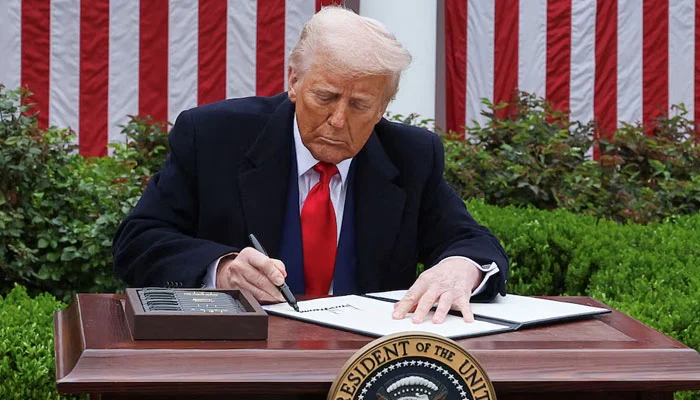
Under an executive order signed last week, import duties jumped from 10% to between 15% and 41%, depending on the country. These so-called “reciprocal tariffs” are aimed at countering what the White House describes as unfair trade practices and imbalanced economic relationships.
Key U.S. allies, including the European Union, Japan, and South Korea, now face a 15% tariff on a broad range of goods—despite previously reaching bilateral agreements designed to head off even harsher levies.
Countries such as India are subject to a 25% tariff, with another 25% set to be added within three weeks. Meanwhile, Syria, Myanmar, and Laos have been hit with the highest rate, facing tariffs of 40% or more.
Trump’s Messaging and Industry Concerns
Just before the tariffs went into effect, Trump took to Truth Social to celebrate the move, writing:
“RECIPROCAL TARIFFS TAKE EFFECT AT MIDNIGHT TONIGHT! BILLIONS OF DOLLARS… WILL START FLOWING INTO THE USA.”
In a follow-up post after the midnight deadline passed, he added:
“IT’S MIDNIGHT!!! BILLIONS OF DOLLARS IN TARIFFS ARE NOW FLOW.”
Despite the administration’s optimism, many U.S. businesses and industry groups are voicing alarm. Economists have also warned that the higher costs are likely to be passed on to consumers, potentially fueling inflation and putting pressure on small businesses already struggling with rising costs.
Marc Busch, an international trade expert at Georgetown University, noted that many companies had stocked up on inventory during the 90-day delay before the tariffs took effect. But with that buffer dwindling, price increases could soon hit consumers — particularly as the back-to-school shopping season ramps up.
Uncertainties Remain for U.S. Trade Partners
Some countries that recently struck trade deals with Washington are still unclear about how their agreements will be implemented. Japan, for instance, has yet to receive a definitive date for reduced auto tariffs — a sticking point in its deal with the U.S.
Meanwhile, U.S. car imports broadly remain subject to a 25% duty under a separate sector-specific order, adding further complexity.
The EU is also pushing for an exemption for its wine exports, with industry groups warning that tariffs on European wine could significantly harm U.S. restaurants and retailers.
India and Russia-Linked Penalties
India faces one of the sharpest escalations, with its tariffs set to double to 50% by the end of the month. The move is partly a response to India’s continued purchases of Russian oil — a point of contention for the U.S. as it seeks to reduce global financial support for Moscow amid the war in Ukraine.
Trump’s order also warns of future penalties for other nations engaged in similar trade with Russia. Nonetheless, critical sectors like pharmaceuticals and smartphones remain exempt for now.
Brazil Also Targeted
Separately, Trump raised tariffs on Brazilian products from 10% to 50%, citing political concerns, particularly the prosecution of former President Jair Bolsonaro. While exemptions were granted for items such as orange juice and aircraft parts, key exports including coffee, beef, and sugar are now subject to steep duties.
Legal and Economic Implications
Many of these new tariffs are expected to face legal scrutiny, with ongoing lawsuits challenging Trump’s use of emergency powers to implement sweeping trade restrictions. Observers anticipate that the debate could eventually reach the U.S. Supreme Court.
As the new measures take hold, the global trade landscape faces a period of fresh uncertainty — and American consumers and businesses may soon feel the impact at home.