

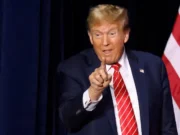











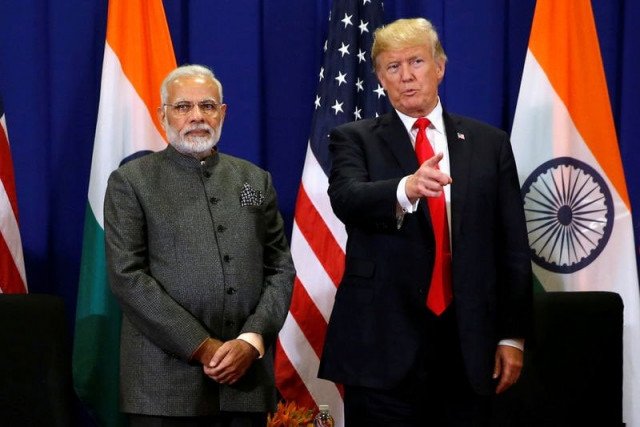
WASHINGTON: For nearly three decades, successive US presidents — Republican and Democrat alike — treated India as a rising partner, choosing to overlook disagreements in order to deepen strategic cooperation. That long-standing bipartisan approach has been abruptly upended by former President Donald Trump.
On Wednesday, Trump’s administration imposed sweeping 50% tariffs on a range of Indian exports. The move is widely viewed as retaliation for India’s continued purchase of Russian oil despite Western efforts to isolate Moscow over its war in Ukraine.
Trump and his advisers have accused New Delhi of indirectly fueling Russia’s assault, with trade adviser Peter Navarro controversially dubbing the conflict “Modi’s war.” But the former president has notably stopped short of harsher measures against Russia itself, saying he still hopes to negotiate a settlement.
Analysts argue that Trump’s decision goes beyond trade disputes or energy concerns. “This is not just about tariffs, not just about Russia, not just about oil,” said Tanvi Madan of the Brookings Institution. “There seems to be something broader going on here — personal on Trump’s side, and politically sensitive for Modi.”
From Bromance to Breakdown
During Trump’s first term, the relationship between the two populist leaders seemed unusually warm. In 2020, Modi hosted Trump before a crowd of more than 120,000 at the inauguration of the world’s largest cricket stadium — a moment celebrated as the high point of US-India ties.
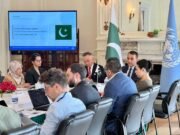
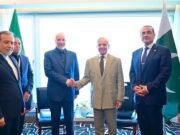
Since then, the chemistry has cooled. Trump has repeatedly sought credit for what he called a “Nobel Prize-worthy” diplomatic breakthrough following clashes between India and Pakistan. New Delhi, which rejects outside mediation on Kashmir, was not impressed. Modi’s government has since distanced itself from Trump’s public musings about brokering peace in the region, while Pakistan has embraced Washington’s attention, even sending its army chief to meet Trump at the White House.
Jake Sullivan, who served as national security adviser under President Biden, said Trump had broken with decades of bipartisan consensus through his “massive trade offensive” against India. This has sparked unease in New Delhi about overreliance on Washington.
Strategic Hedging
For India’s foreign policy establishment, the tariffs have raised uncomfortable questions. Madan notes that the dispute undermines Washington’s assurances that, unlike Beijing, the US would never use economic ties to pressure India. “Even if you resolve this issue,” she said, “you now start to view deepening integration with the US not just as an opportunity but as a potential vulnerability.”
That recalibration is happening as Prime Minister Narendra Modi prepares to visit China for talks. For Beijing, the timing is ideal. “China will see this as a chance to drive a wedge between India and the US,” said William Yang of the International Crisis Group. “Beijing will present itself as a reliable partner interested in closer cooperation with New Delhi.”
Still, any India-China thaw will be tempered by their ongoing border disputes and Beijing’s close military partnership with Pakistan. Nevertheless, Modi’s trip is a clear signal: New Delhi is hedging its bets at a time when US policy appears unpredictable.